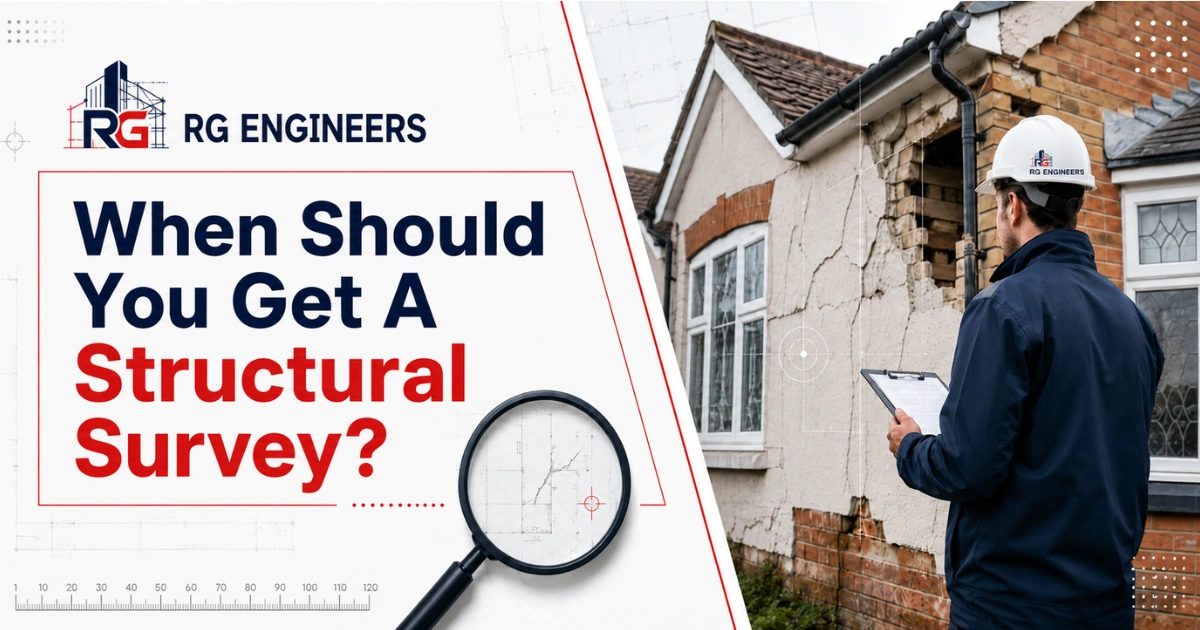
Buying a property is an exciting step, whether it is your first home, a larger family house, or an investment property. However, many buyers focus on the appearance of a property and overlook what may be happening beneath the surface. Problems such as Structural Defects, Foundation Movement, Building Movement, Structural Damage, and hidden deterioration can exist even when a property appears well maintained.
This is why a Structural Survey is often one of the most important checks you can arrange before committing to a purchase. A detailed Structural Survey Report helps identify issues that may affect the safety, stability, value, and future maintenance costs of a property. It provides clear information about the building’s condition and helps buyers make informed decisions.
One of the most common questions asked by Property Buyers is: when should you get a Structural Survey?
In most cases, the ideal time is immediately after your offer has been accepted but before contracts are exchanged. This gives you enough time to review the findings, understand any Structural Concerns, and decide whether you wish to proceed with the purchase.
A professional Structural Surveyor can identify hidden issues, explain the severity of any defects, and provide practical recommendations. Whether you are Buying A Property in London, Slough, South Harrow, or elsewhere in the UK, understanding the right time to arrange a survey can save considerable time, money, and stress.
What Is A Structural Survey?
A Structural Survey is a detailed inspection that focuses on the structural condition of a property.
Unlike a basic valuation report, a Property Structural Survey examines the parts of a building that provide support and stability. The purpose is to identify Structural Issues that may affect the property’s safety or performance.
A Structural Surveyor will typically inspect:
- Foundations
- External walls
- Internal walls
- Roof Structure
- Floors
- Ceilings
- Chimneys
- Structural supports
The findings are recorded in a Structural Survey Report. This report explains any Structural Defects, Structural Damage, Structural Movement, or Building Condition concerns identified during the inspection.
The report may also include Structural Recommendations for further investigations, repairs, or monitoring where necessary.
The Best Time To Arrange A Structural Survey
Timing is important when arranging a Structural Survey Before Purchase.
Many buyers ask whether they should arrange the survey before making an offer or wait until later in the buying process.
After Your Offer Is Accepted
The best time to arrange a Pre-purchase Structural Survey is usually after the seller accepts your offer.
At this stage:
- The seller is committed to progressing the sale.
- Access to the property is normally available.
- Survey costs are less likely to be wasted.
- You can identify structural problems before becoming legally committed.
This timing allows you to gain a clear understanding of the property’s condition while still having flexibility in the transaction.
Before Exchanging Contracts
A Structural Survey should always be completed before contracts are exchanged.
Once contracts are exchanged, the purchase becomes legally binding. If major Structural Defects are discovered after this point, the responsibility for repairs may fall entirely on the buyer.
Completing a House Purchase Survey before exchange gives you valuable information that can influence your decision.
For example, the survey may reveal:
- Foundation Settlement
- Structural Cracking
- Roof Structure problems
- Building Movement
- Property Subsidence
- Structural Deterioration
If serious defects are identified, you may be able to renegotiate the purchase price, request repairs, or withdraw from the purchase altogether.
Why A Structural Survey Matters Before Buying A Property
Many structural issues are not obvious during a normal property viewing.
Fresh paint, new flooring, and cosmetic improvements can hide underlying structural concerns. A professional Property Inspection helps identify problems that may otherwise remain unnoticed until after completion.
Protecting Your Investment
For most people, a Residential Property is one of the largest investments they will ever make.
A Structural Assessment provides valuable information about the property’s condition and highlights risks that could result in expensive repair costs later.
This allows Property Buyers to make informed decisions based on facts rather than assumptions.
Understanding Structural Condition
A Structural Condition Survey provides a detailed picture of how the building is performing.
The report helps answer important questions such as:
- Is the property structurally sound?
- Are there signs of movement?
- Is there evidence of subsidence?
- Are repairs likely to be required?
- Are structural elements performing correctly?
Understanding these issues before purchase can prevent unexpected surprises after moving in.
When Is A Structural Survey Essential?
Although not every property requires the same level of investigation, there are situations where a Building Structural Survey is strongly recommended.
Older Or Historic Properties
Older buildings often contain hidden structural issues that have developed over many years.
Properties that are more than 50 to 80 years old may experience:
- Foundation Movement
- Structural Deterioration
- Timber decay
- Settlement Cracks
- Roof Structure problems
These issues are not always visible during a viewing, making a Structural Engineer Survey particularly valuable.
A detailed Structural Evaluation helps determine whether the building remains stable and identifies any repairs that may be required.
Properties With Previous Alterations
Properties that have undergone significant alterations should also be carefully assessed.
Examples include:
- Extensions
- Loft conversions
- Internal reconfigurations
- Removed load-bearing walls
While alterations can improve a property, they may also affect the way loads are distributed throughout the structure.
A House Structural Survey helps determine whether previous work has had any impact on the building’s stability.
Properties Showing Visible Damage
Visible defects often indicate the need for further investigation.
A Structural Inspection is recommended if you notice:
- Wall Cracks
- Cracked Brickwork
- Uneven Floors
- Bowing Walls
- Sagging Roof
- Damp Related Movement
- Structural Cracking
These signs do not automatically indicate serious structural problems, but they should always be assessed by an experienced Structural Surveyor.
Signs You Should Arrange A Structural Survey Immediately
Certain warning signs should never be ignored.
Wall Cracks
Wall Cracks are one of the most common reasons homeowners arrange a Structural Survey.
While some cracks occur naturally due to minor settlement, others may indicate Structural Movement or Foundation Settlement.
The size, location, pattern, and direction of cracking can provide important clues about the underlying cause.
Cracked Brickwork
Cracked Brickwork may indicate:
- Building Movement
- Ground Movement
- Foundation problems
- Structural instability
A Structural Assessment helps determine whether the damage is cosmetic or related to more significant structural concerns.
Uneven Floors
Uneven Floors can be caused by:
- Foundation Movement
- Structural settlement
- Timber deterioration
- Load distribution problems
Although older properties sometimes have minor irregularities, significant movement should always be investigated.
Sagging Roof Structures
A Sagging Roof may indicate problems with the Roof Structure.
Possible causes include:
- Structural deterioration
- Roof spread
- Timber defects
- Excessive loading
A Building Safety Assessment can identify whether repairs or further investigations are required.
Understanding Subsidence And Structural Movement
One of the most important reasons for arranging a Structural Survey is to investigate possible subsidence or movement within a property.
Many homeowners become concerned when they notice cracks appearing in walls or doors and windows becoming difficult to open. While these signs do not always indicate serious problems, they should never be ignored.
What Is Subsidence?
Subsidence occurs when the ground beneath a property moves downward, causing the foundations to settle unevenly.
This movement can affect the stability of the structure and may result in:
- Structural Cracking
- Foundation Settlement
- Building Movement
- Distorted door frames
- Uneven Floors
- Cracked Brickwork
A Subsidence Structural Survey helps determine whether movement is ongoing and whether repairs or further investigations are required.
Common Signs Of Subsidence
Some common Signs Of Subsidence include:
- Diagonal Wall Cracks
- Cracks around windows and doors
- Sloping floors
- Separation between walls and ceilings
- Distorted openings
- Cracked external brickwork
A Structural Surveyor can assess these signs and determine whether they are linked to Property Subsidence or another issue.
Ground Movement And Soil Movement
Not all structural movement is caused by subsidence.
Ground Movement and Soil Movement can occur for several reasons, including:
- Changes in moisture levels
- Tree root activity
- Poor drainage
- Nearby excavation works
- Seasonal ground shrinkage and expansion
A Building Movement Survey helps identify the source of movement and determine whether it presents a significant risk to the property.
Structural Movement Inspection
A Structural Movement Inspection focuses on identifying evidence of movement within the building.
The surveyor may assess:
- Crack patterns
- Wall alignment
- Floor levels
- Roof Structure performance
- Foundation behaviour
This information helps create a clearer picture of the building’s condition and allows appropriate recommendations to be made.
What Does A Structural Survey Include?
Many Property Buyers are unsure what happens during a Structural Survey.
Although the exact scope can vary depending on the property, a comprehensive Structural Assessment normally includes a detailed inspection of the building’s structural elements.
Property Inspection Process
The survey begins with a thorough Property Inspection.
The Structural Surveyor examines all accessible areas of the building and looks for evidence of:
- Structural Defects
- Structural Damage
- Building Movement
- Foundation Movement
- Structural Deterioration
- Roof Structure concerns
The inspection focuses on the property’s overall stability and structural performance.
Structural Assessment
A Structural Assessment evaluates the condition of key structural components.
This helps determine:
- Whether the structure is performing as expected
- Whether repairs are required
- Whether further investigations are needed
- Whether there are any safety concerns
The assessment forms an important part of the final Structural Assessment Report.
Structural Observations
During the inspection, the surveyor records Structural Observations relating to the property’s condition.
These observations may include:
- Cracked Walls
- Settlement Cracks
- Damp Related Movement
- Bowing Walls
- Roof spread
- Structural instability
Each observation helps build an overall understanding of the property’s condition.
Structural Evaluation
A Structural Evaluation considers the significance of any defects that are identified.
Not every defect requires major repairs.
The evaluation helps determine:
- The likely cause
- The level of risk
- The urgency of action
- Potential repair options
This information is particularly valuable when Buying A Property.
Structural Findings
The Structural Findings section of the report summarises the issues identified during the survey.
This may include:
- Structural Defects
- Foundation Settlement
- Subsidence concerns
- Building Movement
- Roof Structure problems
- Structural Damage
The findings help Property Buyers understand the true condition of the building.
Structural Recommendations
The report will normally include Structural Recommendations based on the findings.
These recommendations may involve:
- Monitoring movement
- Further investigations
- Repair works
- Specialist assessments
- Ongoing maintenance
The goal is to provide practical guidance that supports informed decision-making.
Homebuyer Survey vs Structural Survey
Many buyers are unsure whether they need a Homebuyer Structural Survey or a full Structural Survey.
Understanding the difference can help ensure the correct level of inspection is chosen.
What Is A Homebuyer Survey?
A Homebuyer Structural Survey is generally suitable for modern properties that appear to be in reasonable condition.
It provides an overview of the building and highlights significant issues that may affect value or safety.
However, it is less detailed than a full Structural Survey.
When Is A Homebuyer Survey Suitable?
A Homebuyer Survey may be suitable when:
- The property is relatively modern.
- There are no obvious structural concerns.
- No major alterations have been carried out.
- The building appears well maintained.
For many standard homes, this level of inspection provides sufficient information.
When Is A Full Structural Survey Recommended?
A full Structural Survey is usually recommended when:
- The property is older or historic.
- There are visible Structural Defects.
- Cracks are present.
- Signs Of Subsidence are visible.
- Significant alterations have been carried out.
- The construction method is unusual.
Properties with timber frames, listed status, thatched roofs, or extensive modifications often benefit from a more detailed assessment.
Building Survey vs Structural Survey
Many people use these terms interchangeably, but there can be differences in scope.
A Building Survey may cover a broad range of property issues, while a Structural Survey focuses specifically on structural performance, stability, movement, and defects.
Choosing the right survey depends on the age, condition, and complexity of the property.
What Happens After Receiving A Structural Survey Report?
Receiving the Structural Survey Report is an important stage in the property purchase process.
The report provides valuable information that can influence your next steps.
Reviewing The Findings
The first step is to review the Structural Findings carefully.
Pay particular attention to:
- Structural Damage
- Foundation Movement
- Building Movement
- Structural Instability
- Subsidence concerns
- Roof Structure defects
Understanding these issues helps you evaluate the property’s condition realistically.
Assessing Repair Costs
Some structural issues may require repair works.
Understanding potential costs can help you decide whether the property remains a suitable investment.
In some cases, relatively minor repairs may be required. In others, significant structural work may be necessary.
Renegotiating The Purchase Price
One of the biggest advantages of arranging a Structural Survey Before Purchase is the opportunity to renegotiate.
If the survey identifies major defects, buyers may be able to:
- Request repairs
- Negotiate a lower purchase price
- Seek specialist investigations
- Reconsider the purchase
This is why arranging the survey before exchanging contracts is so important.
Deciding Whether To Proceed
The survey ultimately helps buyers make informed decisions.
Rather than relying on assumptions, you have professional evidence regarding the property’s condition.
This reduces uncertainty and allows you to proceed with greater confidence.
When Should You Delay A Structural Survey?
Although arranging a survey early is important, there are situations where waiting may make sense.
Before An Offer Is Accepted
Most sellers are unlikely to allow detailed Structural Inspections before an offer has been accepted.
At this stage, there is no commitment from either party.
Waiting until the offer is accepted helps avoid unnecessary costs and complications.
If The Property Chain Is Incomplete
In some cases, it may be sensible to wait until the seller is more committed to the transaction.
If the property chain is unstable, there is a greater risk of the sale collapsing before completion.
Delaying the survey slightly can help reduce the chance of spending money unnecessarily.
Conclusion
Knowing when to get a Structural Survey can make a significant difference when Buying A Property.
For most Property Buyers, the ideal time is immediately after an offer is accepted but before contracts are exchanged. This timing provides an opportunity to identify Structural Defects, Structural Damage, Building Movement, Foundation Movement, Subsidence concerns, and other Property Defects before becoming legally committed to the purchase.
A professional Structural Survey Report provides valuable insight into the Building Condition and helps buyers understand any risks associated with the property. Whether you are considering a Residential Property, an older home, or a property showing signs of movement, a detailed Structural Assessment can help protect your investment.
By arranging the right survey at the right time, homeowners and property buyers can make informed decisions, avoid unexpected repair costs, and move forward with greater confidence.