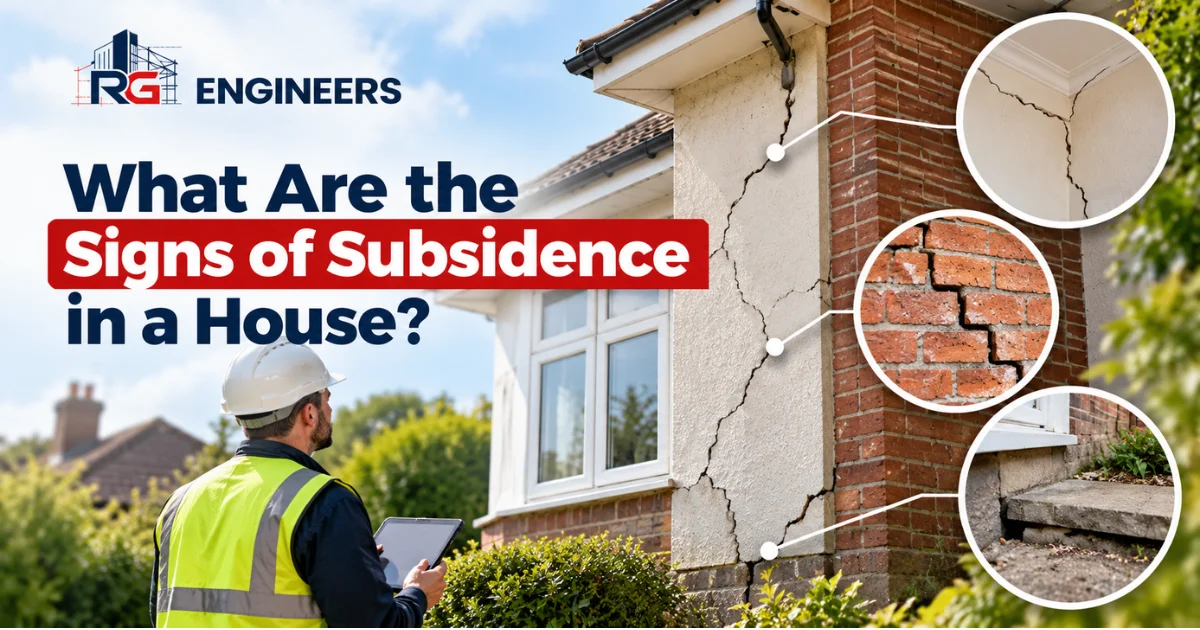
Have you noticed new cracks around your windows or doors that suddenly refuse to close properly? These changes could be early signs of subsidence, although they don’t always mean your home has a structural problem. The main signs of subsidence in a house include diagonal wall cracks, sticking doors and windows, uneven floors, and gaps where an extension joins the main building. Cracks may also appear in both internal plaster and external brickwork.
Subsidence happens when the ground beneath a property moves downwards, causing its foundations to move with it. This can put stress on walls, floors, and door frames.
What Are the Early Signs of Subsidence Inside a House?
1. Diagonal Cracks Around Doors and Windows
One of the most recognisable signs of subsidence is a diagonal crack near a door or window. These cracks may:
- Extend diagonally from the corner of an opening.
- Become wider towards one end, often the top.
- Continue growing over time.
- Appear in both plaster and underlying masonry.
Cracks that appear suddenly, widen over time, or develop alongside other structural changes deserve attention. A crack wider than 3 mm is a particular concern, but smaller cracks can also indicate movement. The crack’s pattern and surrounding damage are just as important as its width.
2. Doors and Windows Suddenly Sticking
Have your doors started catching against their frames without an obvious reason? A door that previously closed smoothly might begin scraping against its frame or failing to latch. Windows may also become difficult to open or close. Check whether the problem appeared alongside new cracks or visible gaps around the frame. Timber swelling due to humidity can cause similar problems. A sticking door on its own does not confirm subsidence.
3. Cracked or Rippling Wallpaper
Wallpaper can sometimes reveal movement that is less obvious in the wall beneath it. Look for new wrinkles, tears, or separation at wallpaper joints. These may appear near doorways, windows, or where walls meet ceilings. When a wall changes shape, the wallpaper covering it can wrinkle or pull apart. Dampness and poor adhesion can create similar effects. Wallpaper damage becomes more concerning when other structural changes appear nearby.
4. Sloping or Uneven Floors
A floor that develops a noticeable slope or dip may indicate movement beneath part of the building. You might notice furniture leaning or a new gap between a solid floor and the skirting board. Changes in a ground-bearing concrete floor deserve particular attention because they may indicate movement in the supporting ground.
Older timber floors can slope because of damaged joists or other construction problems. An uneven floor does not automatically mean the foundations are subsiding.
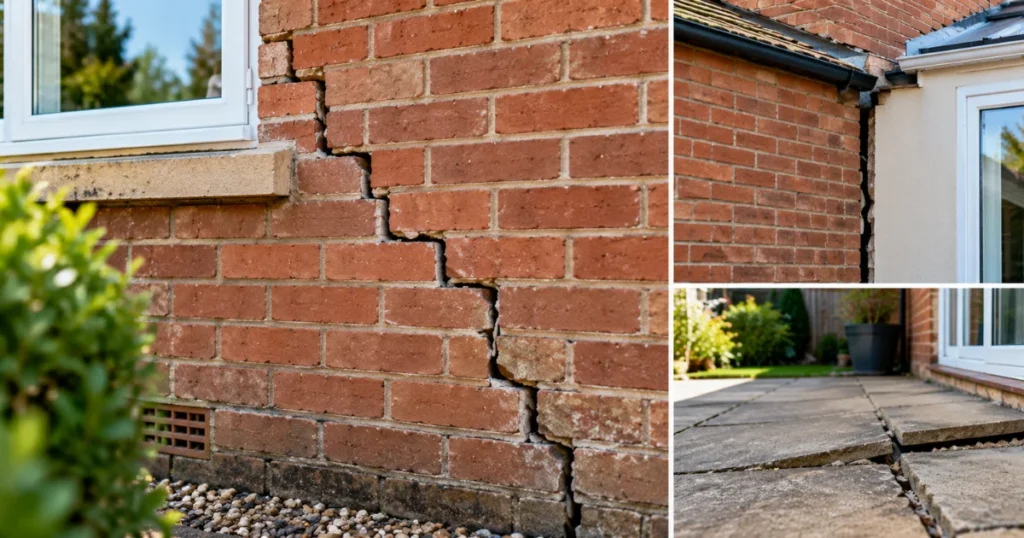
What Are the Signs of Subsidence Outside a House?
Stair-Step Cracks in Brickwork
Stair-step cracks follow mortar joints, creating a stepped pattern through external brickwork. They commonly appear near windows, doors, or building corners. A crack extending through several courses of brickwork may indicate uneven movement, especially if it continues widening. If similar cracks appear in corresponding positions inside and outside the property, the damage may extend deeper than the surface finish.
Gaps Between a House and an Extension
A widening gap where an extension joins the original house can be another warning sign. The extension and main building may have different foundation depths or ground conditions. If they move by different amounts, a separation can develop. This can affect rear extensions, conservatories, and other attached structures.
A narrow, stable joint crack may be less concerning. Increasing separation, displaced brickwork, or distorted openings requires investigation.
Cracked or Sunken Paving Near the House
Patios, paths, and driveways can develop cracks or dips because of poor ground compaction, drainage problems, or local ground movement. Cracked paving alone is a weak sign of house subsidence. It becomes more relevant when new ground changes appear alongside damage to nearby walls or foundations.
How Can You Tell the Difference Between Subsidence and Normal Settlement?
Subsidence and settlement both involve downward movement, but their underlying causes differ.
| Feature | Normal settlement | Subsidence |
| Main process | Building weight compresses the supporting soil | Changes in the supporting ground cause foundations to move downwards |
| When it occurs | Commonly during the early years after construction | Can occur in buildings of any age |
| Possible causes | Compression or consolidation of soil under the building’s weight | Clay shrinkage, leaking drains, or other loss of ground support |
| Visible effects | Cracks or movement, sometimes minor | Cracks, distorted openings, or uneven movement |
| What needs checking | Whether settlement has stabilised | Why the supporting ground has moved and whether movement continues |
Both settlement and subsidence can cause structural damage. The distinction depends mainly on why the ground or foundations are moving, not simply how wide the cracks appear. This distinction is also explained by the Financial Ombudsman Service in its guidance on ground movement and home insurance.
What Causes Subsidence in UK Houses?
Clay Soil Shrinkage
Clay soil expands or shrinks as its moisture content changes. During prolonged dry weather, clay can lose moisture and shrink. This may reduce support beneath parts of a building’s foundations. Shrinkable clay is present in parts of London and South East England, making local ground conditions particularly relevant.
Trees and Shrub Roots
Trees and large shrubs draw water from the surrounding soil. Where foundations rest on shrinkable clay, this moisture loss can contribute to ground movement. The risk depends on the tree species, distance from the building, foundation depth, and soil conditions. A tree near your home is not proof that it is causing subsidence. The relationship needs proper investigation before deciding on any action.
Leaking Underground Drains
Damaged drains or water pipes can release water into the surrounding ground. In some soil conditions, escaping water can wash away fine particles or weaken the material supporting foundations. This can cause localised movement, particularly where leaks continue unnoticed. For further information, read the RICS Subsidence Consumer Guide.
How Can You Check for Possible Subsidence?
Start by recording visible changes without disturbing the building. Take dated photographs of cracks, including a ruler to show their approximate width. Record the location of each crack so later photographs can be compared accurately. Also make a note of when doors began sticking, whether gaps have widened, or when a floor slope first became noticeable.
A structural professional may recommend installing a crack monitor. This measures movement over time and can help establish whether a crack is still changing. Monitoring sometimes needs to continue through different seasons because moisture conditions can influence ground movement. These observations help establish whether damage is changing, but photographs alone cannot confirm subsidence.
Do not wait to monitor a wall that appears unstable or is moving rapidly. Keep clear of the affected area and seek urgent professional assistance.

Who Should You Contact If You Suspect Subsidence?
If you suspect subsidence, contact your buildings insurer promptly. Check your policy before arranging major investigations or repairs, as the insurer may appoint specialists. A structural engineer or suitably qualified surveyor can investigate possible movement and assess the condition of the property. An assessment may involve:
- Examining internal and external cracking.
- Checking distorted doors, windows, and floors.
- Reviewing previous building alterations and repairs.
- Considering whether drainage or foundation investigations are needed.
- Recommending crack monitoring if movement remains uncertain.
Further investigations may be necessary before the cause can be established. Some subsidence problems can stabilise after their underlying cause is addressed. Others may require structural repairs, depending on the damage and ground conditions. RG Engineers provides structural surveys for property owners and buyers concerned about structural defects.
Frequently Asked Questions
Can Subsidence Happen Without Visible Cracks?
Yes. Ground movement may begin before cracks become visible. Changes in floor levels or door alignment can sometimes appear first, although these symptoms have other possible causes.
Are Subsidence Cracks Always Wider Than 3 mm?
No. There is no minimum crack width that proves or rules out subsidence. A smaller crack that keeps widening may be more concerning than an older crack that has remained unchanged.
Can Subsidence Stop Without Structural Repairs?
Yes. Some movement may stabilise when ground conditions change or the underlying cause is addressed. Whether structural repairs are necessary depends on the damage, its cause, and the results of professional investigations.
How Do I Check for Subsidence Before Buying a House?
Look for new cracks, distorted openings, uneven floors, and evidence of previous structural repairs. Arrange an appropriate property survey and seek specialist advice if movement is suspected. Ask about past subsidence claims or investigations before completing the purchase.
Final Thoughts
Possible subsidence should be investigated when unexplained damage or movement develops, particularly when several warning signs appear together. If you are concerned about possible subsidence in London, South Harrow, Slough, or surrounding areas, RG Engineers can help assess structural defects and advise on the next steps.