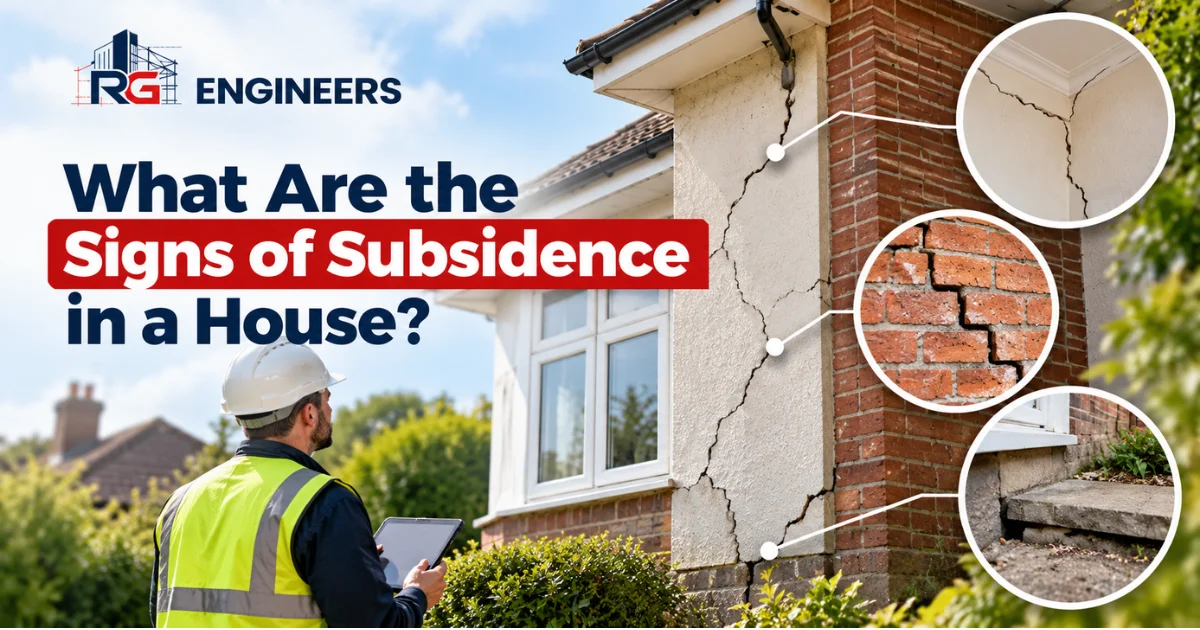

Noticed a crack in your living room wall or outside brickwork? You might wonder whether it’s normal or a sign of structural damage. Cracks in house walls are not always serious. Fine cracks often develop as plaster dries or building materials expand and contract. Others can indicate foundation movement, settlement, or subsidence. The key is to look at the crack’s width, pattern, location, and whether it’s changing. Sticking doors, uneven floors, or distorted brickwork can also suggest a deeper problem. Here’s how to recognise which wall cracks need attention and what to do next.
When Should You Worry About Cracks in House Walls?
You should be concerned when cracks appear suddenly, continue growing, or occur alongside visible building movement. A narrow, unchanged crack in plaster is usually less concerning than one spreading through external brickwork.
Warning signs include:
- Cracks becoming wider or longer over time.
- Diagonal or stair-step cracks extending through brickwork.
- Horizontal cracks alongside bulging or leaning walls.
- Cracks visible on both sides of a masonry wall.
- Doors or windows suddenly sticking or becoming misaligned.
- New gaps around frames or noticeably sloping floors.
For example, a fine crack above a doorway may be cosmetic. If it widens and the door starts sticking, the surrounding structure needs checking. Several warning signs appearing together are particularly important, even when individual cracks seem small.
How Wide Does a Wall Crack Need to Be Before Worrying?
Crack width can help describe damage severity, but it isn’t a complete measure of structural safety. The Building Research Establishment (BRE) uses six damage categories in Digest 251. These range from negligible cracking to very severe structural damage.
| BRE category | Typical crack width | Description |
| 0 | Under about 0.1 mm | Negligible |
| 1 | Up to about 1 mm | Very slight |
| 2 | Up to about 5 mm | Slight |
| 3 | Around 5–15 mm | Moderate |
| 4 | Around 15–25 mm | Severe |
| 5 | Usually over 25 mm | Very severe |
These widths are guides, not safety limits. The number of cracks, visible distortion, repair requirements, and whether movement continues also affect the assessment. The BRE categories concern damage to low-rise buildings, particularly visible masonry damage linked to structural distortion. They should not be applied mechanically to every plaster joint or gap between building sections. For instance, several 3 mm cracks with distorted door frames can indicate more significant damage than their widths suggest. For further information, see BRE’s guidance on assessing cracks in houses.
What Do Different Types of Wall Cracks Mean?
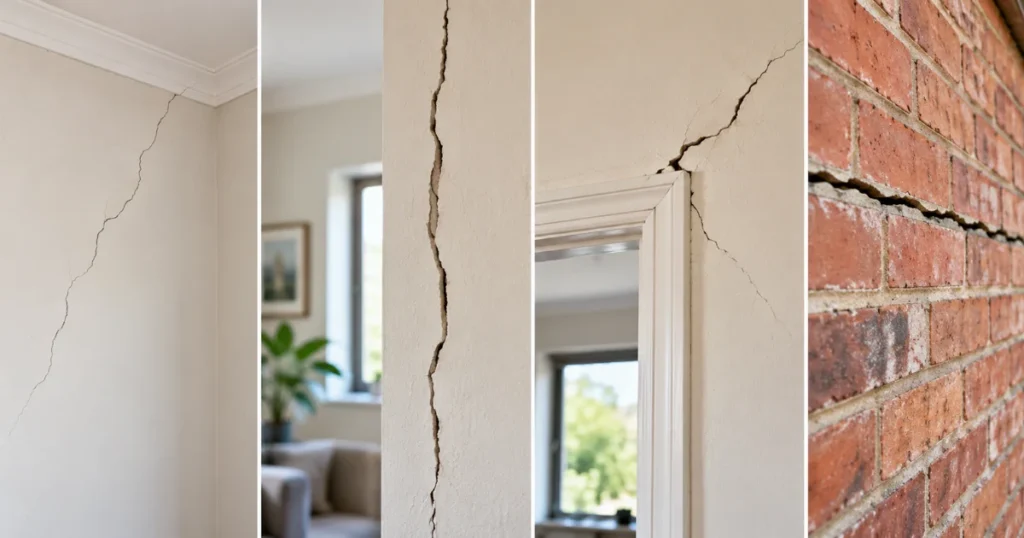
The appearance of a crack can help determine which parts of the wall need closer inspection.
Hairline Cracks in Plaster Walls
Hairline cracks are very fine lines affecting the plaster surface. They commonly appear around plasterboard joints, newly plastered walls, or where walls meet ceilings. Drying plaster, minor temperature changes, and slight movement between materials are common explanations. A stable hairline crack is often cosmetic. Repeated cracking in the same place may need investigation before redecorating.
Vertical Cracks in Internal Walls
Vertical cracks run upwards or downwards through a wall. A fine, straight crack limited to plaster may be minor. Wider cracks extending into masonry deserve closer attention, particularly when the surrounding wall is distorted. Check whether the crack continues through several materials or appears alongside other damage.
Diagonal Cracks Around Doors and Windows
Diagonal cracks usually extend at an angle from the corners of openings. Doorways and windows interrupt the wall, making their corners common places for movement-related cracks to appear. A diagonal crack that widens towards one end can indicate uneven movement. Distorted door or window frames make the concern more significant.
Horizontal Cracks in Brick Walls
Horizontal cracks often follow mortar joints across a brick wall. They can indicate problems involving wall restraint, pressure, or corrosion of embedded metal components. A horizontal crack accompanied by outward bulging, leaning, or displaced masonry needs prompt professional attention.
Stair-Step Cracks in External Brickwork
Stair-step cracks follow mortar joints in a stepped pattern. They may develop when different parts of a masonry wall move unevenly. For example, cracking might extend diagonally from a ground-floor window towards a building corner. This pattern deserves investigation when the crack is widening or the surrounding brickwork has shifted.
What Causes Cracks in House Walls?
Understanding the cause helps determine whether decoration, monitoring, or structural repairs are appropriate.
Natural Settlement
Buildings can experience some settlement as loads transfer through their foundations into the ground. Small amounts of settlement do not necessarily indicate a serious defect. Uneven or continuing settlement, though, can place additional stress on masonry and create cracks.
Subsidence and Foundation Movement
Subsidence occurs when the ground supporting a building moves downwards, affecting its foundations. Clay soils are particularly relevant in parts of the UK. During prolonged dry periods, clay can lose moisture and shrink. Nearby trees may influence soil moisture, while leaking drains can weaken or wash away supporting ground. Foundation movement can then place stress on walls and cause visible cracking. The RICS consumer guide to subsidence explains these causes and the warning signs homeowners should recognise.
Movement Between a House and an Extension
Cracks sometimes form where a newer extension joins the original house. Different foundations, construction materials, or ground conditions can cause the two sections to move differently. A fine, stable joint crack may be less concerning. Widening separation, displaced masonry, or distorted openings can indicate a more significant problem. Understanding how both structures are supported is important before deciding on repairs.
How Can You Tell If Wall Cracks Are Getting Worse?
If there are no immediate signs of danger, you can record the crack’s condition to help identify changes.
Three simple steps can help:
- Take dated photographs. Place a ruler beside the crack to show its size and location.
- Record the crack’s width. Note the widest visible point and whether it affects plaster or masonry.
- Compare changes over time. Watch for increased width, new branches, or movement around nearby openings.
Try to photograph the same position each time. This makes comparisons more useful. For cracks requiring closer investigation, a professional may recommend a crack monitor. This measures movement across a crack over an agreed period. Monitoring helps establish whether movement continues, but it does not identify every possible cause. Do not rely on monitoring alone if the wall is leaning, masonry is becoming loose, or the crack is expanding rapidly.
When Should a Structural Engineer Inspect Wall Cracks?
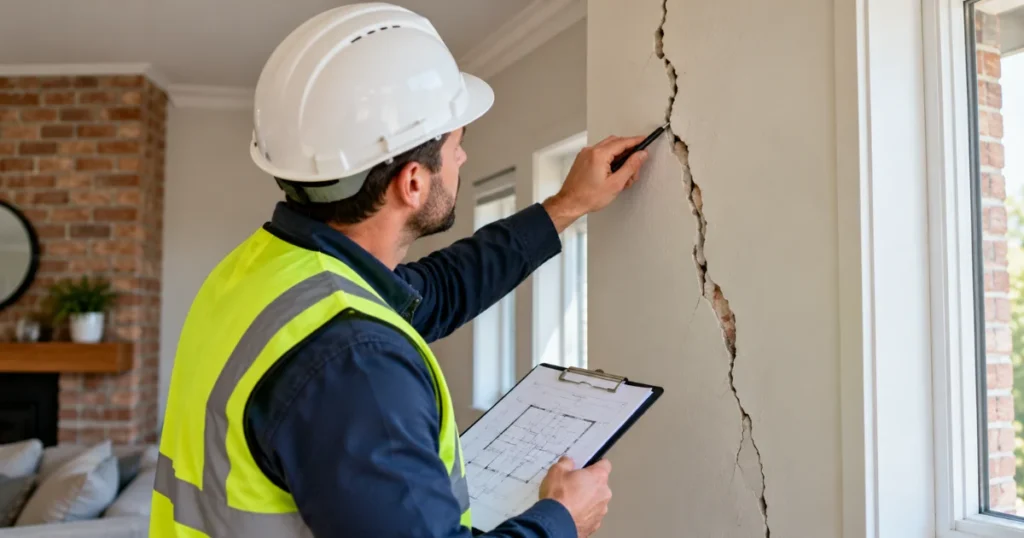
Arrange a structural inspection when cracking suggests possible movement or damage to the building’s supporting structure. A structural engineer may examine the crack pattern, surrounding masonry, nearby openings, and previous building alterations.
The assessment can include checking:
- Whether cracking extends beyond the surface plaster.
- Signs of distortion in walls, floors, or openings.
- Possible movement affecting foundations.
- Previous repairs or structural alterations.
- Whether further investigation or monitoring is needed.
The findings help determine whether the damage is cosmetic, requires monitoring, or needs structural repairs. Where the cause is uncertain, the engineer may recommend additional checks before specifying repair work.
If you suspect immediate structural instability, keep people away from the affected area and seek urgent professional assistance.
If subsidence is suspected, contact your buildings insurer before commissioning major repairs. Your insurer may arrange specialist investigations under your policy.
Frequently Asked Questions
Are Cracks Where a Wall Meets the Ceiling Serious?
Small cracks along wall and ceiling joints are often cosmetic. A widening gap or sagging ceiling may indicate movement affecting the structure and should be investigated.
Should I Fill a Crack Before Having It Inspected?
Avoid filling a crack that is growing or appears structural. Covering it can hide evidence needed during an assessment. Cosmetic cracks can usually be repaired once their cause is understood.
Can Small Wall Cracks Be a Sign of Subsidence?
Yes. Small cracks can sometimes appear during early foundation movement. Their location, development, and surrounding damage are more important than width alone.
Can a Wall Crack Be Serious Even If It Hasn’t Grown?
Yes. A crack may be associated with previous structural damage or an unstable wall. Bulging masonry, displaced bricks, or distorted supports need assessment even without recorded crack growth.
Final Thoughts
Wall cracks range from minor surface defects to signs of structural damage. The right response depends on the condition of the wall and whether movement is occurring. If you’re concerned about cracks in your property, RG Engineers can help assess structural issues in London, South Harrow, Slough, and surrounding areas.